



Media monitor
Violations of Women’s and Newborns’ Rights in Childbirth Getting Worse in Slovak Hospitals during Pandemic

ODZ + ŽK, 29. 10. 2020
Slovak non-governmental organisations Občan, demokracia a zodpovednosť (Citizen, Democracy and Accountability (CDA)) and Ženské kruhy (Women’s Circles) warn of the increasing number of violations of the human rights of women and newborns in childbirth in Slovak hospitals during the current pandemic crisis. The separation of mothers from their newborns is one of the most severe forms of these violations. The organisations urgently stress that healthcare facilities and the state must ensure that childbirth care is provided in compliance with human rights and medical standards even in this complicated situation. Čítajte viac
Coronavirus: Women denied abortions because of the pandemic
BBC News, 24. 6. 2020
In some European countries, hospitals have stopped performing abortions. In others, where abortion is severely restricted, women have been unable to travel to get treatment elsewhere. In the past few weeks we’ve spoken to women who have resorted to backstreet abortions, and others left with no choice but to continue with unwanted pregnancies. Human rights organisations are now urging countries to make sure abortions are safely available.
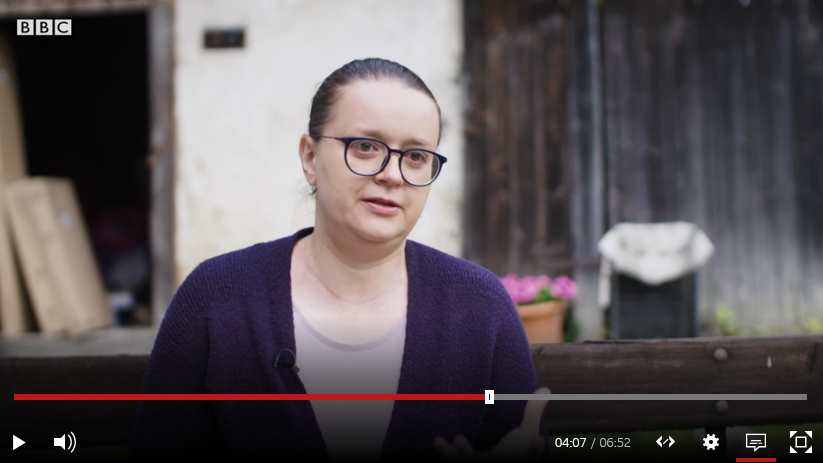
See the BBC News report about the current struggle of women in some European countries to get abortions during the pandemic, due to restrictions of leading decision-makers. The reporters found a similar situation in countries across Europe – in Romania, Italy, Croatia, and Slovakia. According to Jean Mackenzie, the BBC Europe Correspondent, “in these countries it had been already difficult for women to get an abortion, and this crisis has just put more obstacles in their way”.
Denied beds, pain relief and contact with their babies: the women giving birth amid Covid-19

The Guardian, 28. 5. 2020
Following reports worldwide, experts are warning that pandemic is pushing back progress on prenatal and maternity care
After Denisa’s son was born premature at 26 weeks she was unable to hold him, but spent as much time as possible near his incubator so he could get used to her voice. By the time he was well enough to be held by his mother, a state of emergency had been declared in Slovakia and Denisa was told to vacate her bed and leave the hospital to make way for Covid-19 patients.
The rush of patients never came, but strict rules meant she was unable to see her baby until he was discharged six weeks later. “Instead of a hug, I went home empty-handed only with my head full of questions,” she says. “Each day without my baby was taking away my strength and harming my mental health.”
Unable to have a birth companion, coerced into undergoing medical interventions, denied pain relief and separated from their newborns. This is the new reality for expectant and new mothers in many countries, as experts warn the coronavirus outbreak is leading to an infringement of women’s birth rights. Čítajte viac
COVID-19: Ensure women’s access to sexual and reproductive health and rights

Council of Europe, 7. 5. 2020
Statement by Commissioner Dunja Mijatović
It is already clear that the pandemic will deepen existing gender inequalities, given women’s over-representation in professions (and other unpaid activities) which expose them to a high risk of infection and in low-paid and precarious jobs which will be particularly badly affected by the ensuing economic crisis. Worryingly, the lockdown imposed in several European countries has also increased the exposure of women to gender-based violence, in particular domestic violence and sexual violence. While many member states are taking laudable measures in an attempt to mitigate the negative effects of the crisis on women’s rights and gender equality, they should not neglect women’s sexual and reproductive health and rights. Full respect of women’s sexual and reproductive health and rights is an essential component of Council of Europe member states’ obligations to guarantee women’s human rights and advance gender equality. Čítajte viac
Joint civil society statement on COVID-19 and abortion

NGOs, 23. 4. 2020
Today, we addressed the president of the SR, the president of the Slovakian parliament and the prime minister an appeal not to misuse the current COVID-19 pandemic for further restrictions in women´s human rights in the area of sexual and reproductive health. On the contrary, it is necessary to guarantee their safe and timely access to essential sexual and reproductive health services, goods, and information in this situation.
The Joint civil society statement (8 April 2020):
European governments must ensure safe and timely access to abortion care during the COVID-19 pandemic
The COVID-19 pandemic and public health crisis is presenting grave challenges for health care systems across Europe. As European countries work to address the pandemic, protect their populations, and meet the increased demand on health care workers and health care facilities it is vital that they adopt measures to safeguard the health, human dignity, physical and mental integrity, and reproductive autonomy of women and girls in the region. Čítajte viac
Public Defender of Rights: Access to sexual and reproductive health services during the COVID-19 pandemic

PDOR, 22. 4. 2020
Related to the providing of adequate services in the area of sexual and reproductive health during the COVID-19 pandemic, the Public Defender of Rights (PDOR) Mária Patakyová addressed minister of healthcare Marek Krajčí. Medialised information as well as NGOs reports show that doctors in some healthcare facilities in Slovakia refuse to perform abortions in the current situation. Hereby below, we present the full statement of the PDOR:
Media reports as well as reports from NGOs show that some health care facilities in Slovakia restricted women’s right to a birth companion of her choice during the COVID-19 pandemic. In addition, some health care facilities deny women access to pain relief (epidural analgesia), or perform caesarean section, or separate women from their newborns without proper medical indication. Some doctors are using the COVID-19 pandemic to suspend abortion care.
The Public Defender of Rights is concerned that these practices are not in line with international human rights standards and World Health Organization´s guidelines. Čítajte viac
“Mrs Mária” is not Mária and she will not vote in Slovakia

The Slovak Spectator, 16. 2. 2016
A stolen photo of a woman taken in New York has been used for calling on people to go to the ballot box in the upcoming election.
An anonymous online leaflet with a photo of an older lady and a question: Do you want Mrs Mária to decide about your future? calls for participation in March parliamentary elections. With rigidly clenched lips and a slightly restrained look, Mrs Mária is not smiling in the photo. She is dressed fittingly for the season in a winter coat; and in a fur cap she looks determined. She will apparently go to cast her vote and ruin the future of young people. This is the basic message of the pre-election online leaflet that started spreading over the internet during recent days. Čítajte viac
Maternity wards have a problem with attitude

The Slovak Spectator
Maternity wards in the Trnava and Bratislava regions were recently called out for violations of human rights. Were the claims exaggerated? A mother who gave birth both in Canada and Trnava compares.
No matter what country, the birth experience is highly dependent on individual hospital staff, their characters and attitudes. I had friendly doctors both in Canada and Trnava. My last birth in Slovakia was three years ago, and apparently things have improved since then in Trnava. There are, however, some overarching themes that differentiate Slovakia from other Western countries. The most important deficiency in Slovak hospitals is not a matter of money, equipment, or expertise, but of attitude. Čítajte viac
Maternity wards pay little attention to human rights

The Slovak Spectator
“So I stayed there those two hours alone, without my baby, without my husband, two hours I was lying there on my own, incredibly thirsty, terribly pained, full of negative emotions about what I’d allowed to happen, […] it wasn’t supposed to be like this.” This is how a woman describes the immediate moments after she gave birth to her child in one of the Slovak hospitals in an interview which was part of the monitoring by human rights watchdog Citizen, Democracy, Accountability (ODZ) and Women’s Circles. The findings of their two-year-long monitoring were published in late April 2015 and show that even though most Slovak hospitals now label themselves baby-friendly and have introduced practices that were unheard of some years ago, from the perspective of human rights, most deliveries in Slovakia are well below standards observed in advanced democracies. Čítajte viac
A question of rights

The Slovak Spectator
Human rights might seem an abstract concept in a hospital maternity ward, but in essence the issue is no more than basic human decency and compassion.
When the Duchess of Cambridge, wearing high heels and her radiant smile, left the hospital just a few hours after having delivered her second child, women in Slovakia once again started asking why they are kept locked up in maternity wards for days after their children are born. Still the length of hospital stays appear a minor problem in the light of the monitoring by the human rights watchdog group Citizen, Democracy, Accountability published in late April. Čítajte viac